From October 25 to 28, the ASEAN 47th Summit in Kuala Lumpur became the world’s most important diplomatic scenario. The summit gathered thirty heads of state and government, including U.S. President Donald Trump and Chinese Premier Li Qiang. The gathering, thus, has been crucial not only for the future of the Southeast Asian bloc’s internal organization but also for ASEAN’s need to balance and play a role as a bridge between the U.S. and China.
Historic Milestones and Regional Integration
Kuala Lumpur’s summit marked a significant milestone for ASEAN. For the bloc itself, the main event of the summit was the formal admission of Timor-Leste as its eleventh member, the bloc’s first expansion since 1999. Timor-Leste achieved independence in 2002 after 24 years of bitter war with Indonesia that claimed up to 200,000 lives. For Timor-Leste, being accepted into ASEAN is seen as a way to consolidate its independence by integrating into its regional community.
However, its accession was delayed by Myanmar’s objections. The military junta cited Timor-Leste’s engagement with Myanmar’s opposition, the National Unity Government, as a violation of ASEAN’s principle of non-interference. Finally, after Timor-Leste softened its stance and assured Myanmar it would not permit opposition groups to operate on its soil, Myanmar backed down and allowed Timor-Leste’s accession as ASEAN’s 11th member in October 2025.
On a regional diplomacy dimension, maybe the event that could have more impact in the future is the peace agreement signed by Thailand and Cambodia following deadly border clashes that had killed over 40 people and displaced 300,000 earlier this year. The resulting “Kuala Lumpur peace accord,” signed by both nations with Trump and Malaysian Prime Minister Anwar Ibrahim as witnesses, committed the countries to a permanent ceasefire and the deployment of external observers to monitor the situation. The agreement might represent more of a political symbol than a long-term framework for peace, but it still shows how ASEAN can play a role in conflict resolution in the region — an important consideration in the situation in Myanmar.
On the economic front, there were two important moves. First, ASEAN leaders signed the Second Protocol to Amend the ASEAN Trade in Goods Agreement (ATIGA). The new protocol updated the region’s core free trade pact to reduce barriers and flexibilize trade rules, with the goal of boosting intra-ASEAN commerce in response to global economic uncertainties and external trade barriers.
Second, was the signing of the ASEAN-China Free Trade Area Upgrade Protocol (ACFTA 3.0). The agreement with Beijing aims to expand cooperation in digital trade, green development, and supply chain connectivity. With ASEAN-China trade reaching nearly $600 billion in the first seven months of 2025 alone, this upgraded partnership shows how the region’s deepening economic interdependence with Beijing. In a time of growing tensions between China and the US, this may challenge the neutral approach that marks ASEAN’s identity.
Myanmar’s Civil War: The Thorn in the ASEAN
Where the ASEAN seems to be meeting its limits is in the protracted civil war of Myanmar after the Military Junta’s takeover.
During the summit, ASEAN leaders reaffirmed their “Five-Point Consensus” from 2021, demanding an immediate ceasefire and a peaceful framework for dialogue to resolve the matter, but ASEAN acknowledged its lack of progress. Nonetheless, in their strongest stance since the beginning of the war, ASEAN members explicitly stated that “cessation of violence and inclusive political dialogue must precede elections,” directly challenging Myanmar’s military junta plans to hold national elections in December 2025.
The ASEAN also rejected Myanmar’s request to send observer teams to monitor these elections, given the junta’s failure to implement the peace plan. The Junta wasn’t represented in ASEAN, as Myanmar was represented only by a “non-political delegate”, because ASEAN continues to bar junta leaders from high-level meetings until “meaningful progress” towards dialogue with the opposition is made.
As we can observe, the Myanmar conflict shows the limits of the consensus-based and non-interventionist ASEAN approach when confronting one of its own members. Nevertheless, the fact that ASEAN has been able to operate in relatively normal conditions with Myanmar shows that the civil war in Myanmar is both a troubling challenge that clearly shows what cannot be expected from ASEAN, but also a point in favor of the bloc’s cautious approach to maintain stability and cooperation among countries with different forms of government.
Balancing Great-Power Competition
The elephant in the room of this ASEAN summit has been the tensions between China and the United States, and their push to attract Southeast Asia to their side.
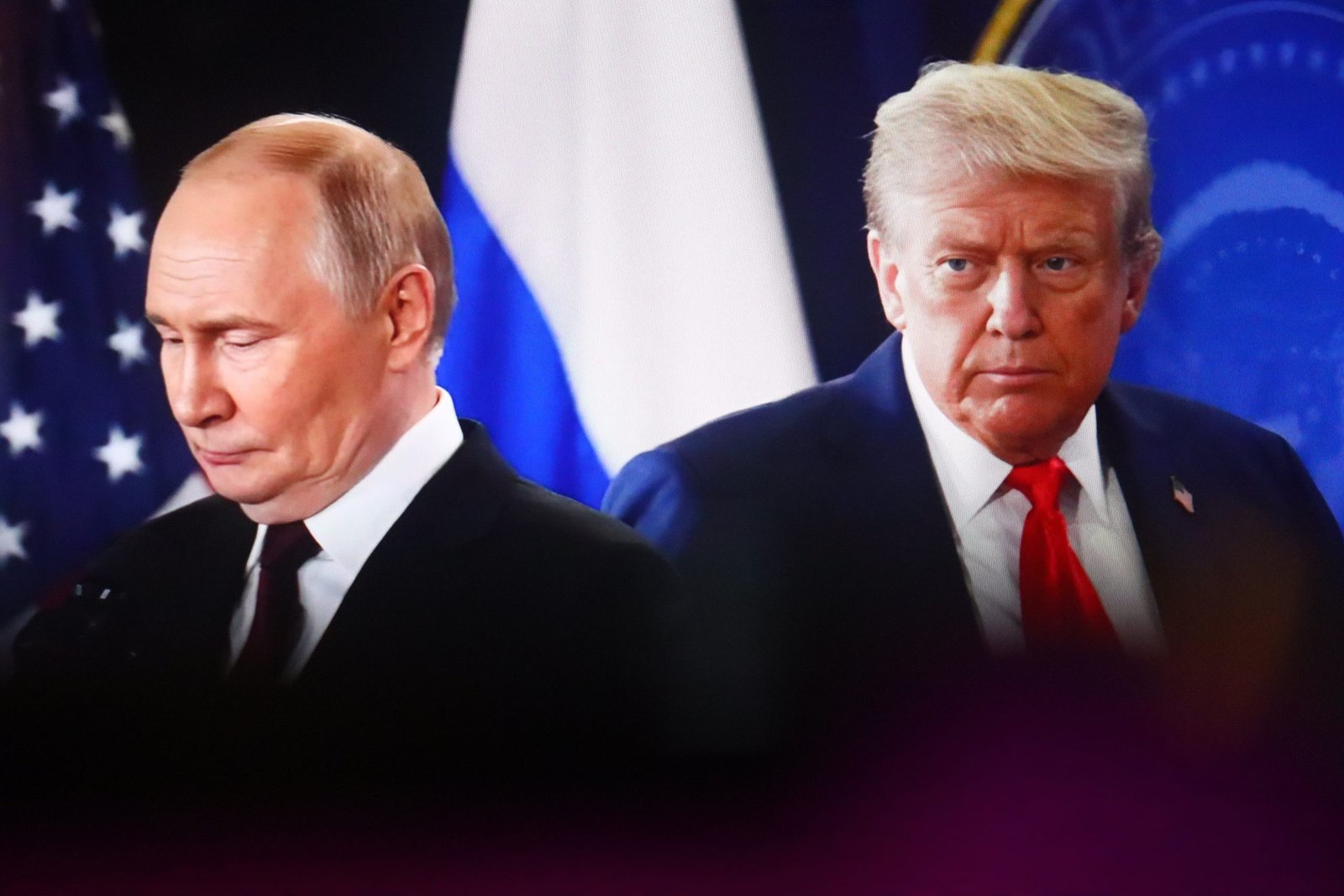
This was the second time that President Donald Trump attended an ASEAN summit, and he brought his characteristically pragmatic agenda. In a six-hour meeting on October 26, Trump oversaw the signing of multiple bilateral trade agreements with Malaysia, Thailand, Vietnam, and Cambodia. Like many other deals made after Liberation Day tariffs, these deals reflected President Trump’s transactional approach. The U.S. will maintain a baseline 19% tariff on ASEAN exports, while offering exemptions for specific products in exchange for concessions on U.S. market access.
Malaysia secured tariff exemptions for 1,711 products, including electronics and rubber goods, in exchange for aligning with U.S. sanctions policy, most likely aimed at Russia and China. That wasn’t well received at home, and Prime Minister Anwar Ibrahim received criticism from opposition figures who condemned this provision as “an act of surrender” that threatens Malaysia’s longstanding neutrality and could force difficult choices regarding trade with China or Russia.
President Trump also secured two Memoranda of Understanding on critical minerals with Malaysia and Thailand. The President’s goal here is to diversify America’s global supply chains for rare earth elements away from China, following Beijing’s weaponization of its dominance in 90% of rare earth refining capabilities through export controls. These agreements demonstrate that the U.S. is combining a strategy of re-industrialization with “friend-shoring”, aiming to redirect supply chains through allied economies in critical sectors for high-tech manufacturing.
President Trump departed Kuala Lumpur after his first day of meetings, leaving lower-level officials to represent the United States in subsequent sessions. This partial absence gave Li Qiang, the Chinese Premier, an opportunity to shine.
Li Qiang seized the opportunity to present China as a champion of multilateralism in opposition to the U.S. throughout the summit. Primer Li rhetorically emphasized collective prosperity and mutual respect. He called on ASEAN and China to “unite more closely” against external disruptions, a not-so-veiled reference to the United States, and to “defend their legitimate rights and interests through mutual reliance and coordinated actions.”
As mentioned above, Beijing aimed to expand the ACFTA 3.0, and Li also announced new funding for the ASEAN-China Cooperation Fund, proposing joint initiatives including a Digital Academy, an AI cooperation platform, and a center for maritime development. Li Qiang framed these offers within China’s preferred narrative: that Asian nations can achieve prosperity through regional integration without external interference, clearly aiming to exclude the U.S. and the West from the East Asian regional Order.
The ASEAN preferred a hedging strategy, maximizing benefits from competing powers while minimizing commitments that would alienate either of them. The bloc simultaneously endorsed China-led multilateral trade agreements while individual members pursued U.S.-led bilateral agreements. This dual approach reflects ASEAN’s economic reality, in which China is the largest trading partner for all ten ASEAN members, while the United States is the top foreign investor, a crucial export market, and security partner for several of its members.
Nevertheless, as tension between Washington and Beijing grows, this calculated balancing becomes more complicated to sustain. For example, the Philippines, which assumes ASEAN’s chairmanship in 2026, is expected to push the South China Sea question to the top of the ASEAN agenda given its own maritime disputes with China. This could strain the consensus with Cambodia and Laos, which maintain closer ties to Beijing.
Similarly, while Vietnam signed a trade framework to address its $123 billion trade surplus with America, and has been increasing its security ties with the United States, it must carefully manage its relationship with China, which is becoming an important trade and investment partner, and which shares a common ideological background and border.
Thailand is another country that has been walking a fine line with its relationship between Washington and Beijing. In recent years, Thailand, a traditional U.S. ally in the region and a key partner in the struggle against Communism, has become closer to Beijing. Thailand has distanced itself from the U.S. in part due to criticism by previous U.S. administrations of the state of democratic institutions in the country, and in part due to China’s growing economic influence.
This is why, immediately after signing the agreement on rare earth minerals with the United States, Prime Minister Anutin clarified that the deal “poses no concern for ties with China” and imposes “no obligations.” Such reassurances demonstrate how ASEAN leaders feel compelled to publicly affirm that they’re not abandoning China, even while deepening cooperation with Washington.
Looking Ahead: Unity Under Pressure
During this summit, ASEAN leaders adopted agreements covering around 80 documents, and presented the “ASEAN Vision 2045: Our Shared Future.” The document aims to serve as a roadmap for the next two decades, presenting a positive and ambitious outlook for the ASEAN bloc in the face of rising geopolitical tensions.
With this vision, ASEAN aims to establish its position as a significant force in the region and the world, capable of shaping its own destiny rather than being drawn into conflicts or pulled apart by external powers such as the U.S. and China. Nonetheless, that is easier said than done, and ASEAN still holds important internal challenges to navigate.
Despite the success of the summit in presenting a strong bloc, the unresolved issue of Myanmar has highlighted the limitations of the organization’s non-interventionist approach. With the Philippines taking the chairmanship next, likely with an agenda more antagonistic to China, ASEAN will have to navigate important internal disagreements.
For ASEAN, it will be a challenge to adapt a governance model based on consensus to provide rapid responses to address a highly unstable geopolitical landscape and potentially create tools to convey internal discipline to members who do not follow ASEAN’s collective decisions.
The Kuala Lumpur summit shows that ASEAN remains the essential nexus where China and the United States compete, and where middle powers invest diplomatic capital. The challenge ahead is whether Southeast Asian nations can maintain their collective autonomy and stability without forfeiting the economic growth fueled by China or the security benefits and market access offered by the United States. The coming years will be a test of character for the future of ASEAN.
Orion Policy Institute (OPI) is an independent, non-profit, tax-exempt think tank focusing on a broad range of issues at the local, national, and global levels. OPI does not take institutional policy positions. Accordingly, all views, positions, and conclusions represented herein should be understood to be solely those of the author(s) and do not necessarily reflect the views of OPI.